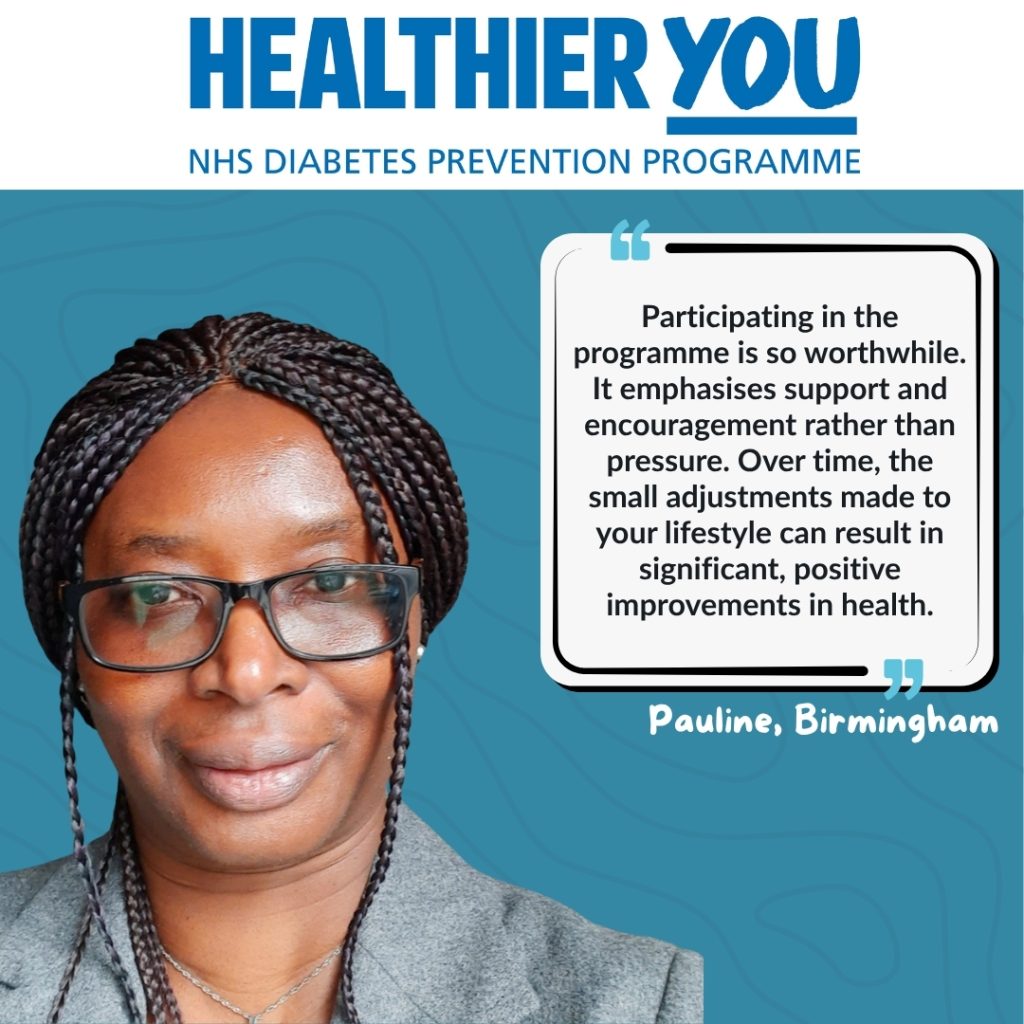
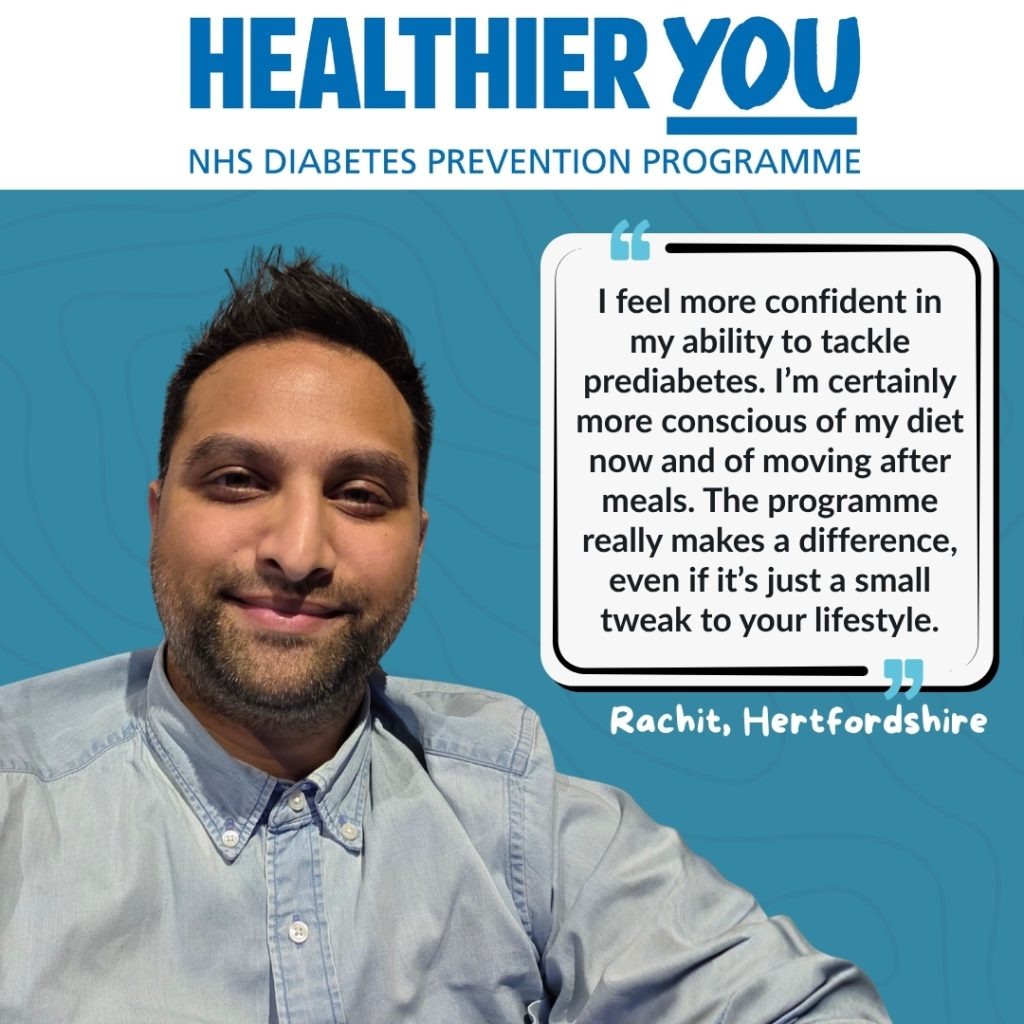
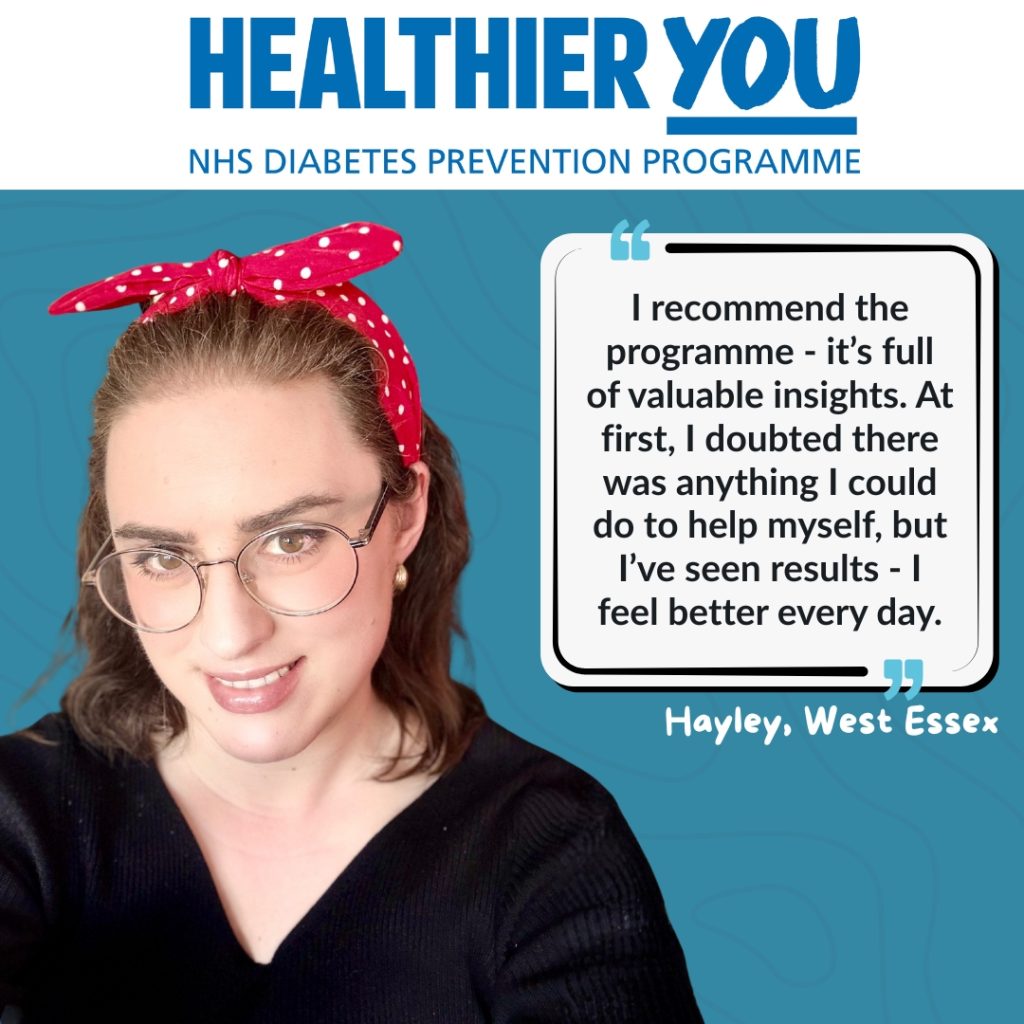
It’s estimated more than 6 million people across England are at risk of developing type 2 diabetes.
The good news? Diabetes is often preventable, and small, simple changes can make a powerful difference.
We are proud to be a leading provider of the Healthier You: NHS Diabetes Prevention Programme, a free service that’s already helped thousands of people live healthier lives and reduce their risk of developing diabetes.
About the programme
Our programme is an engaging, supportive experience designed to help you take control of your health and feel your best. You’ll be encouraged to use the sessions in a way that works for you, so you can get the most out of the service and tailor the experience to your needs.
The programme consists of 13 group sessions, each lasting 1–2 hours, delivered over 9 months. This means you have access to ongoing support, helping you make sustainable lifestyle changes at a realistic and manageable pace.
You’ll improve your overall health and reduce your risk of developing type 2 diabetes through small, manageable changes that make a big difference over time.

Learn with us
Eating Well
Understand portion sizes, read food labels with confidence, and learn how to make balanced food choices that work for you and your budget.
Moving More
Discover enjoyable ways to be active every day and create a routine that fits your lifestyle.
Managing Weight
Explore practical strategies that support gradual, sustainable weight management.
Improving Wellbeing
Learn techniques for managing stress and building positive sleep habits to support your overall health.
Strengthening Mindset
Develop the confidence, motivation, and resilience to make healthy habits that last.
How do I join?
By acting now, you can be part of our programme which has helped thousands of people across England to reduce their risk of developing type 2 diabetes.
There are two ways to join:
GP referral Speak with your GP or a relevant healthcare professional to find out your eligibility and request a referral.
Self-registration If you know you’re at risk, just fill out our online form with your up-to-date blood glucose reading (HbA1c) and NHS number.
Understanding your risk
Why have I been referred?
Your HbA1c blood test shows that you are at high risk of developing type 2 diabetes. This does not mean you have type 2 diabetes. The good news is that making sustainable lifestyle changes can help reduce your risk – and the programme is here to support you.
What is HbA1c?
HbA1c is a blood test that shows your average blood glucose level over the previous two to three months. An HbA1c result of 42–47 mmol/mol means you are at high risk of developing type 2 diabetes.
Does this mean I have type 2 diabetes?
No. You have been referred because you are at high risk, not because you have type 2 diabetes. This is an opportunity to take positive action now to support your future health.
I feel healthy. Do I really need to do anything?
Yes, it is still worth taking action. People at high risk of type 2 diabetes often feel well and have no symptoms. Knowing about your risk gives you the opportunity to make changes before type 2 diabetes develops.
Why am I at high risk?
There is not usually one single reason. Your risk can be influenced by a combination of factors, including age, family history, ethnicity and genetics, alongside lifestyle and weight. Some factors cannot be changed, but there are others you can influence – and that is where the programme can help.
Can I prevent type 2 diabetes?
There is no guarantee, but making healthy lifestyle changes can significantly reduce your risk. The programme will help you find realistic changes that work for you and support you to maintain them over time.
Your referral and getting started
What happens now that I’ve been referred?
Your dedicated Living Well Taking Control coach will contact you to talk you through the programme and help you get started. You will have the opportunity to ask questions, discuss your individual needs and find out what to expect.
Do I have to take part?
Taking part is your choice, but being referred gives you access to free NHS support specifically designed to help you reduce your risk of developing type 2 diabetes. Even if you are unsure, we encourage you to find out more before deciding.
I’ve signed up. What happens next?
You’ll join group sessions held at a local venue close to you, where you’ll be supported by your coach throughout the programme. Session 1 introduces you to the programme, helps you understand your starting point and supports you to identify what you would like to achieve.
What if I’m nervous about starting?
That is completely understandable. You do not need to arrive with all the answers or already be making changes. Your coach will welcome you, explain what to expect and support you from where you are now.
Do I need to attend every session?
The programme is designed so that sessions build on each other, helping you develop your knowledge, skills and confidence over time. There is a minimum number of sessions you need to attend to progress through and complete the programme, so regular attendance is important.
What if I miss a session?
We understand that you may have planned absences or occasionally be unable to attend. Let your coach know in advance where possible or contact them as soon as you can if you miss a session unexpectedly. They can talk you through the next steps and help you stay on track.
The programme
What will the programme help me with?
You’ll explore practical ways to support your health, including:
- eating well and making informed food choices that work for you
- moving more and building activity into everyday life
- achieving and maintaining a healthy weight
- managing stress and supporting your mental wellbeing
- improving your sleep and supporting your energy levels
- understanding your habits and what influences them
- setting realistic goals and making changes you can maintain
How long is the programme?
The programme includes 13 sessions over nine months. This gives you time to make changes gradually, see what works for you and build habits that can last.
What are the sessions like?
Sessions are supportive, practical and focused on everyday life. You will learn more about your health, share ideas, explore what works for you and set realistic goals with support from your coach.
Will I be told what to do?
No. There is no one-size-fits-all approach. Your coach will help you use the information from the programme to identify changes that are realistic and meaningful for you.
Do I need to change everything at once?
Definitely not. Small, achievable changes can add up over time. The programme helps you decide what matters most to you and build from there.
I’ve tried making healthy changes before. Why will this be different?
Knowing what to do is only part of making a lasting change. The programme also helps you explore your habits, motivation, triggers and barriers, set meaningful goals and find strategies that work in your everyday life.
What if I have a health condition, disability or additional support need?
Please tell your coach. Our programme is accessible and we will work with you to understand what support or reasonable adjustments may help you take part.
Eating well and moving more
Do I need to follow a special diet?
No. The programme focuses on a balanced, enjoyable and sustainable way of eating, rather than restrictive diets or giving up everything you enjoy.
Can I still eat carbohydrates?
Yes. Carbohydrates are an important part of a healthy diet. You’ll learn about different types of carbohydrates, portion sizes and how higher-fibre, wholegrain choices can support your health.
Do I have to lose weight?
Not everyone will have the same goals. If weight loss would benefit your health, your coach can support you to make gradual, realistic changes that work for you.
Do I need to join a gym?
No. Moving more can take many forms. Walking, gardening, active travel, household activities and other everyday movement all count. The programme will help you explore ways to become more active that suit you.
How much physical activity should I aim for?
Adults are encouraged to aim for at least 150 minutes of moderate-intensity activity each week, alongside muscle-strengthening activities on at least two days. If you are not currently active, you can start small and gradually build up.
Common questions and concerns
I’m too busy to make big lifestyle changes.
You do not need to completely change your lifestyle. Your coach will help you find small, realistic changes that fit around your work, family, caring responsibilities and other commitments.
I’m worried I won’t be able to stick to it.
You are not expected to get everything right. Making changes takes time, and setbacks are normal. Your coach will help you recognise what is working, overcome barriers and keep moving towards your goals.
My family don’t understand why I’m making changes.
You may find it helpful to explain that the changes are about reducing your risk of type 2 diabetes and supporting your overall health. Involving family or friends can also make healthy changes easier and more enjoyable.
I’m worried I’ll develop type 2 diabetes anyway.
Lifestyle changes cannot remove your risk completely, but they can help reduce it. Taking part gives you an opportunity to focus on the things you can influence and build habits that can benefit your wider health too.
Is it really worth starting if I haven’t made any changes yet?
Yes. You do not need to make changes before you join – that is what the programme is there to help you with. Your starting point is simply where you are today.
Questions for your healthcare team
Your coach can provide evidence-based health information and support you to make lifestyle changes, but they cannot provide clinical advice, diagnose conditions, interpret your individual blood-test results or advise on medication.
Speak to your GP or appropriate healthcare professional if you have questions about:
- your individual HbA1c result or other blood-test results
- whether you have diabetes or another health condition
- medication or changes to medication
- new or concerning symptoms
- individual clinical treatment or monitoring
- whether particular lifestyle changes are clinically appropriate for a health condition
Find out more